Archive
The Supreme Court and the Future of Medicaid — NEJM
Perspective from The New England Journal of Medicine —
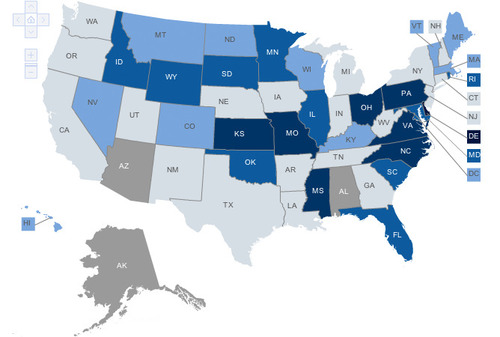
Perhaps the biggest of the many surprises found in the Supreme Court’s June 28 decision on the Affordable Care Act (ACA) was the Court’s conclusion that the law’s Medicaid expansion scheduled for 2014 was unconstitutional.1 Attention before June 28 was focused on whether the Court would uphold the individual mandate to obtain health insurance coverage, but in the wake of the Court’s decision, focus has shifted to the question of whether states will refuse to participate in expanding the Medicaid program, given the Court’s holding that the Secretary of Health and Human Services cannot enforce the expansion as a mandate.
See on www.nejm.org
For an aggregation of other articles on Hot Topics in Healthcare Law, go to my magazine on Scoop.it – Hot Topics in Healthcare Law and Regulation and my newspaper on Paper.li – Hot Topics in Healthcare Law.
For an aggregation of other articles on improving healthcare, go to my internet magazine Scoop.it! Changing Health for the Better.
July 31, 2012 — CMS Hosts ACO Application Process National Provider Call
On Oct 20, 2011, CMS issued a final rule under the Affordable Care Act to establish the Medicare Shared Savings Program (Shared Savings Program), along with a notice for the Advance Payment Model that will provide additional support to physician-led and rural Accountable Care Organizations (ACOs) participating in the Shared Savings Program.
These two initiatives will help providers participate in ACOs to improve quality of care for Medicare patients.
On Monday, July 31, 2012, CMS hosts a National Provider Call, where subject matter experts provide an overview and updates to the Shared Savings Program application and Advance Payment Model application processes for the January 1, 2013 Shared Savings Program start date. A question and answer session follows the presentations.
See on www.cms.gov
Judge Richard Posner: Affordable Care Act upheld — Why the Commerce Clause should have been enough
I am not surprised that the health care law was upheld (except for the Medicaid provision, and I don’t think that ruling will have much effect) by the Supreme Court. I was confident, despite the shellacking given the solicitor general at the oral argument and the Intrade odds that were so strongly predictive of invalidation, that the law would be upheld and that Chief Justice Roberts would write the majority opinion. But I thought the vote would be 6-3, with Kennedy joining Roberts and the liberal wing, and that the ground would be the commerce power. Not that there is anything wrong with upholding the law under Congress’ power to tax.
The question of whether an exaction is a tax arises mainly in cases under the Tax Injunction Act, which forbids federal courts to “enjoin, suspend or restrain the assessment, levy or collection of any tax under State law,” provided that an adequate remedy is available in the state courts. I happened to write an opinion for my court a few years ago in which the issue was whether a pair of Illinois statutes that required casinos to deposit 3 percent of their revenues in a segregated state fund—the “Horse Racing Equity Trust Fund”—for disbursement to the racetracks, for the purpose of increasing winners’ and runner-ups’ purses and improve the tracks, imposed a tax within the meaning of the Tax Injunction Act, and we held that it did, even though the exaction was not called a tax. We pointed out that it was not called a tax because “tax” has become a dirty word (this I believe is one of the psychological consequences of the economic depression in which the nation finds itself), which is the same reason the tax in the health care law on people who don’t buy health insurance is not called a tax.
But it is a tax. The health care case didn’t involve the Tax Injunction Act, but a similar statute, the Anti-Injunction Act, applicable to federal taxes (it forbids enjoining the assessment of such taxes, thus relegating the taxpayer to a suit for refund); the court held that Congress didn’t intend that act to apply to the health care law. But it upheld the penalty for failing to buy health insurance on the sensible ground, similar to the approach taken under the Tax Injunction Act, that though they called it a penalty, it is functionally a tax rather than a fine or a fee.
I thought the court would uphold the “mandate” (that is, the requirement, backed up by the tax or penalty, of buying health insurance) on the basis of the Commerce Clause because it is obvious, or at least seemed and seems obvious to me, that the requirement is within Congress’ power conferred by Article I of the Constitution to regulate interstate commerce, because respected conservative lower-court judges (Judges Silberman and Sutton) had voted to uphold the mandate, and because invalidating it, necessarily on (as it seemed to me) flimsy grounds, and by a 5-4 vote (the five conservatives versus the four liberals) during an election year, would look like taking sides in the campaign. It would give President Obama an opening to run against the Supreme Court. It would confirm the widespread opinion of the “Roberts Court” as being the conservative mirror image of the Warren Court. It would be bad for the court, and a chief justice is by virtue of his position the justice most concerned with the court’s power and prestige as an institution. The other justices have a greater incentive than he to trade off the court’s power and prestige against their own influence and prestige, which often can be enhanced by an oppositional posture.
The health industry is of course an interstate business; there is a continuous flow of health insurance payments, health insurance reimbursements, drugs, doctors, patients, donations to hospitals, research money, etc. across state boundaries. Congress’ regulatory power under the Commerce Clause is not limited to direct control of an interstate transaction; it includes the regulation of activities that affect an interstate industry, with “activities” including inactivity. The public accommodations provisions of the Civil Right Act of 1964 were upheld on the basis of the commerce power, even though the provisions required hotels and other places of public accommodation to do something—namely serve black travelers—that they didn’t want to do, to force them, in short, to engage in interstate commerce they didn’t want to engage in. And so it is with requiring drivers to be licensed—they would prefer not to have to pay a license fee. Of course they can avoid the fee just by not driving, but tell Americans not to drive and you might as well tell them cut off their feet in order to escape sales tax on shoes.
See on www.slate.com
For an aggregation of other articles on Hot Topics in Healthcare Law, go to my magazine on Scoop.it – Hot Topics in Healthcare Law and Regulation and my newspaper on Paper.li – Hot Topics in Healthcare Law.
For an aggregation of other articles on improving healthcare, go to my internet magazine Scoop.it! Changing Health for the Better.
In the Wake of the SCOTUS’s Affordable Care Act Decision: What’s Next for Health Care Providers?
Health care providers are now faced with the task of adopting and complying with ACA provisions and associated regulations. These provisions include grants, new voluntary programs, payment reductions for poor quality performance, and increased fraud and abuse enforcement. The changes to the health care system found in the ACA are diverse and impact many sectors. There are many new and proposed regulations and a number of upcoming deadlines to be aware of.
See on www.ober.com
ABC Action News I-Team: Independent study shows Florida doctors continue to mark up drugs for hurt workers
A new study released Thursday, July 19, 2012, gives more ammunition to Florida business owners trying to get state legislators to close a legal loophole that they say allows physicians to gouge them when treating injured workers.
The ABC Action News I-Team exposed the problem — and the political money that appears to be keeping the loophole wide open — in a report last February. A bill designed to close the loophole died again during this year’s legislative session in Tallahassee.
The new study by the Workers Compensation Research Institute found that 62 percent of all prescription drug spending in Florida for injured workers was paid to physicians who dispensed medications from their offices — not to pharmacies, which typically charge much less for the same pills.
The cost discrepancy hits employers who must pay physicians the higher prices. Critics of the loophole say the larger workers compensation premiums may limit the ability of Florida employers to hire more workers to boost the state’s sluggish economy.
See on abcactionnews.com.
For an aggregation of other articles on Hot Topics in Healthcare Law, go to my magazine on Scoop.it – Hot Topics in Healthcare Law and Regulation and my newspaper on Paper.li – Hot Topics in Healthcare Law.
For an aggregation of other articles on improving healthcare, go to my internet magazine Scoop.it! Changing Health for the Better.
Gov. Rick Scott ranks Florida counties’ health departments – Tampa Bay Times
Another arm of state government can be added to the growing list of agencies ranked at the behest of Gov. Rick Scott.
Through a public record request, the Times/Herald has obtained a copy of a report that rates the performance of the state’s 67 county health departments.
Indian River County, with a raw score of 58 points out of 69, is at the top of the list. Liberty County’s 23 points is the lowest. Hillsborough County ranked below the average score of 47, and was next-to-last among major metro counties.
The Department of Health, which came up with the ranking system at Scott’s request, says the document completed in December is still a work in progress. The report includes health data, as well as the result of customer satisfaction and employee surveys. It also factors in financial stability and leadership effectiveness.
See on www.tampabay.com
For an aggregation of other articles on Hot Topics in Healthcare Law, go to my magazine on Scoop.it – Hot Topics in Healthcare Law and Regulation and my newspaper on Paper.li – Hot Topics in Healthcare Law.
For an aggregation of other articles on improving healthcare, go to my internet magazine Scoop.it! Changing Health for the Better.
HHS: Hospitals ignoring requirements to report errors
Hospitals are ignoring state regulations that require them to report cases in which medical care harmed a patient, making it almost impossible for health care providers to identify and fix preventable problems, a report to be released today by the Department of Health and Human Services inspector general shows.
…
Researchers say the hospitals’ failure to report problems isn’t a sign of a coverup but rather the staffs’ ignorance of the regulations and what they need to report.
…
Hope for the future lies in electronic health records, Adler says, because “we may be able to prevent events, we may be able to ameliorate events, and (electronic records) may become your surveillance system.”
Incentives included in the 2010 federal health care law to encourage more hospitals to use electronic records may change how errors are tracked and addressed, say researchers of the inspector general’s study.
The health care system is “right on the cusp” of identifying “safety issues just as they happen,” said David Classen, a University of Utah associate professor of medicine and infectious disease.
See on www.usatoday.com
For an aggregation of other articles on Hot Topics in Healthcare Law, go to my magazine on Scoop.it – Hot Topics in Healthcare Law and Regulation and my newspaper on Paper.li – Hot Topics in Healthcare Law.
For an aggregation of other articles on improving healthcare, go to my internet magazine Scoop.it! Changing Health for the Better.
AHCA, therapist fight over notes | Top Story | Health News Florida
Florida’s Agency for Health Care Administration has been trying to shut down Hillandale Assisted Living, a home for mentally disabled adults, for over a year — ever since The Miami Herald reported its long record of abuse and neglect.
But the Pasco County assisted-living facility (ALF) has demanded a full evidentiary hearing. The resulting legal battle has a Tampa mental-health counselor pinned in the middle.
Joanna Theiss Mulder, who counsels residents of Hillandale and other ALFs, has been ordered to testify and turn over her patient records under an AHCA subpoena. Mulder refuses.
In court papers filed on Wednesday, Mulder argued that it would actually violate the law for her to release any records without her patients’ consent.
The patients named on Muller’s subpoena “specifically object to AHCA’s effort to access their records as an invasion of their privacy,” said the papers filed in Hillsborough Circuit Court.
The irony is that both AHCA’s attorney and Mulder see themselves as protectors of the mentally-ill clients who live at Hillandale, judging from their legal arguments.
See on healthnewsflorida.org
For an aggregation of other articles on Hot Topics in Healthcare Law, go to my magazine on Scoop.it – Hot Topics in Healthcare Law and Regulation and my newspaper on Paper.li – Hot Topics in Healthcare Law.
For an aggregation of other articles on improving healthcare, go to my internet magazine Scoop.it! Changing Health for the Better.
Kaiser’s Health Reform Quiz — Test your knowledge of the law
The health reform law promises to deliver big changes in the U.S. health care system. But, as with other sweeping pieces of legislation, it can be hard to get the real facts about what it does. And it is all too easy for misinformation about the law to spread.
Take the Kaiser’s Foundation’s short, 10-question quiz to test your knowledge of the law, and then find out how you compare to the rest of the country, as represented by the findings of the Kaiser Family Foundation’s monthly Health Tracking Poll.
See on healthreform.kff.org
For an aggregation of other articles on Hot Topics in Healthcare Law, go to my magazine on Scoop.it – Hot Topics in Healthcare Law and Regulation and my newspaper on Paper.li – Hot Topics in Healthcare Law.
Patients seek Internet information to start dialogue with physicians about their care – amednews.com
Richard Kravitz, M.D. co-wrote a study that appeared online May 16 in the Journal of Health Communication that he hopes will help other physicians become more at ease when dealing with Internet-searching patients.
One of the most important things doctors should know, he said, is that patients aren’t going online because they don’t trust their physician or are skeptical of their diagnosis. They are searching the Internet to become more engaged in their care.
Dr. Kravitz said patients, especially those with rare conditions, can be a good source of new information for physicians. But while patients may be proficient at finding material online, the doctor’s role is to help them sort through it and assess whether it’s credible, he said.
“Doctors should try to relax about this and just engage in conversations with patients about the information they bring in, some of which will be truthful and relevant, and others won’t be,” Dr. Kravitz said. “We can’t do anything else except to have a candid dialogue about it.”
See on www.ama-assn.org
For an aggregation of other articles on improving healthcare, go to my internet magazine Scoop.it! Changing Health for the Better.
 Joseph Rugg's Health Law Blog