Archive
Getting the Methods Right — The Foundation of Patient-Centered Outcomes Research — NEJM
Perspective from The New England Journal of Medicine —
Health care in the United States has changed dramatically over the past several decades. Today, patients have more options than ever. Making the right choices, whether for prevention, diagnosis, or treatment, requires a critical appraisal of the potential benefits and harms of the options, within the context of the patient’s characteristics, conditions, and preferences.
Many of these choices are available thanks to advances in medical research. Yet most patients and many clinicians find research somewhat mysterious. They have difficulty sorting through the mountains of medical evidence to identify information that is reliable and actionable for their unique circumstances. Patient-centered outcomes research and comparative-effectiveness research promise to enhance decision makers’ ability to fully understand and weigh alternatives.
See on www.nejm.org
For an aggregation of other articles on Hot Topics in Healthcare Law, go to my magazine on Scoop.it – Hot Topics in Healthcare Law and Regulation and my newspaper on Paper.li – Hot Topics in Healthcare Law.
For an aggregation of other articles on improving healthcare, go to my internet magazine Scoop.it! Changing Health for the Better.
The Supreme Court and the Future of Medicaid — NEJM
Perspective from The New England Journal of Medicine —
Perhaps the biggest of the many surprises found in the Supreme Court’s June 28 decision on the Affordable Care Act (ACA) was the Court’s conclusion that the law’s Medicaid expansion scheduled for 2014 was unconstitutional.1 Attention before June 28 was focused on whether the Court would uphold the individual mandate to obtain health insurance coverage, but in the wake of the Court’s decision, focus has shifted to the question of whether states will refuse to participate in expanding the Medicaid program, given the Court’s holding that the Secretary of Health and Human Services cannot enforce the expansion as a mandate.
See on www.nejm.org
For an aggregation of other articles on Hot Topics in Healthcare Law, go to my magazine on Scoop.it – Hot Topics in Healthcare Law and Regulation and my newspaper on Paper.li – Hot Topics in Healthcare Law.
For an aggregation of other articles on improving healthcare, go to my internet magazine Scoop.it! Changing Health for the Better.
Judge Richard Posner: Affordable Care Act upheld — Why the Commerce Clause should have been enough
I am not surprised that the health care law was upheld (except for the Medicaid provision, and I don’t think that ruling will have much effect) by the Supreme Court. I was confident, despite the shellacking given the solicitor general at the oral argument and the Intrade odds that were so strongly predictive of invalidation, that the law would be upheld and that Chief Justice Roberts would write the majority opinion. But I thought the vote would be 6-3, with Kennedy joining Roberts and the liberal wing, and that the ground would be the commerce power. Not that there is anything wrong with upholding the law under Congress’ power to tax.
The question of whether an exaction is a tax arises mainly in cases under the Tax Injunction Act, which forbids federal courts to “enjoin, suspend or restrain the assessment, levy or collection of any tax under State law,” provided that an adequate remedy is available in the state courts. I happened to write an opinion for my court a few years ago in which the issue was whether a pair of Illinois statutes that required casinos to deposit 3 percent of their revenues in a segregated state fund—the “Horse Racing Equity Trust Fund”—for disbursement to the racetracks, for the purpose of increasing winners’ and runner-ups’ purses and improve the tracks, imposed a tax within the meaning of the Tax Injunction Act, and we held that it did, even though the exaction was not called a tax. We pointed out that it was not called a tax because “tax” has become a dirty word (this I believe is one of the psychological consequences of the economic depression in which the nation finds itself), which is the same reason the tax in the health care law on people who don’t buy health insurance is not called a tax.
But it is a tax. The health care case didn’t involve the Tax Injunction Act, but a similar statute, the Anti-Injunction Act, applicable to federal taxes (it forbids enjoining the assessment of such taxes, thus relegating the taxpayer to a suit for refund); the court held that Congress didn’t intend that act to apply to the health care law. But it upheld the penalty for failing to buy health insurance on the sensible ground, similar to the approach taken under the Tax Injunction Act, that though they called it a penalty, it is functionally a tax rather than a fine or a fee.
I thought the court would uphold the “mandate” (that is, the requirement, backed up by the tax or penalty, of buying health insurance) on the basis of the Commerce Clause because it is obvious, or at least seemed and seems obvious to me, that the requirement is within Congress’ power conferred by Article I of the Constitution to regulate interstate commerce, because respected conservative lower-court judges (Judges Silberman and Sutton) had voted to uphold the mandate, and because invalidating it, necessarily on (as it seemed to me) flimsy grounds, and by a 5-4 vote (the five conservatives versus the four liberals) during an election year, would look like taking sides in the campaign. It would give President Obama an opening to run against the Supreme Court. It would confirm the widespread opinion of the “Roberts Court” as being the conservative mirror image of the Warren Court. It would be bad for the court, and a chief justice is by virtue of his position the justice most concerned with the court’s power and prestige as an institution. The other justices have a greater incentive than he to trade off the court’s power and prestige against their own influence and prestige, which often can be enhanced by an oppositional posture.
The health industry is of course an interstate business; there is a continuous flow of health insurance payments, health insurance reimbursements, drugs, doctors, patients, donations to hospitals, research money, etc. across state boundaries. Congress’ regulatory power under the Commerce Clause is not limited to direct control of an interstate transaction; it includes the regulation of activities that affect an interstate industry, with “activities” including inactivity. The public accommodations provisions of the Civil Right Act of 1964 were upheld on the basis of the commerce power, even though the provisions required hotels and other places of public accommodation to do something—namely serve black travelers—that they didn’t want to do, to force them, in short, to engage in interstate commerce they didn’t want to engage in. And so it is with requiring drivers to be licensed—they would prefer not to have to pay a license fee. Of course they can avoid the fee just by not driving, but tell Americans not to drive and you might as well tell them cut off their feet in order to escape sales tax on shoes.
See on www.slate.com
For an aggregation of other articles on Hot Topics in Healthcare Law, go to my magazine on Scoop.it – Hot Topics in Healthcare Law and Regulation and my newspaper on Paper.li – Hot Topics in Healthcare Law.
For an aggregation of other articles on improving healthcare, go to my internet magazine Scoop.it! Changing Health for the Better.
In the Wake of the SCOTUS’s Affordable Care Act Decision: What’s Next for Health Care Providers?
Health care providers are now faced with the task of adopting and complying with ACA provisions and associated regulations. These provisions include grants, new voluntary programs, payment reductions for poor quality performance, and increased fraud and abuse enforcement. The changes to the health care system found in the ACA are diverse and impact many sectors. There are many new and proposed regulations and a number of upcoming deadlines to be aware of.
See on www.ober.com
HHS: Hospitals ignoring requirements to report errors
Hospitals are ignoring state regulations that require them to report cases in which medical care harmed a patient, making it almost impossible for health care providers to identify and fix preventable problems, a report to be released today by the Department of Health and Human Services inspector general shows.
…
Researchers say the hospitals’ failure to report problems isn’t a sign of a coverup but rather the staffs’ ignorance of the regulations and what they need to report.
…
Hope for the future lies in electronic health records, Adler says, because “we may be able to prevent events, we may be able to ameliorate events, and (electronic records) may become your surveillance system.”
Incentives included in the 2010 federal health care law to encourage more hospitals to use electronic records may change how errors are tracked and addressed, say researchers of the inspector general’s study.
The health care system is “right on the cusp” of identifying “safety issues just as they happen,” said David Classen, a University of Utah associate professor of medicine and infectious disease.
See on www.usatoday.com
For an aggregation of other articles on Hot Topics in Healthcare Law, go to my magazine on Scoop.it – Hot Topics in Healthcare Law and Regulation and my newspaper on Paper.li – Hot Topics in Healthcare Law.
For an aggregation of other articles on improving healthcare, go to my internet magazine Scoop.it! Changing Health for the Better.
Kaiser’s Health Reform Quiz — Test your knowledge of the law
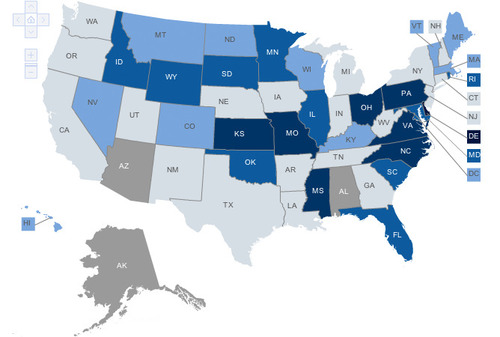
The health reform law promises to deliver big changes in the U.S. health care system. But, as with other sweeping pieces of legislation, it can be hard to get the real facts about what it does. And it is all too easy for misinformation about the law to spread.
Take the Kaiser’s Foundation’s short, 10-question quiz to test your knowledge of the law, and then find out how you compare to the rest of the country, as represented by the findings of the Kaiser Family Foundation’s monthly Health Tracking Poll.
See on healthreform.kff.org
For an aggregation of other articles on Hot Topics in Healthcare Law, go to my magazine on Scoop.it – Hot Topics in Healthcare Law and Regulation and my newspaper on Paper.li – Hot Topics in Healthcare Law.
Finding a Consultant to Help a Physician’s Practice with EHR Selection, Implementation — www.physicianspractice.com
Here are some of the ways a consultant can help you get your EHR picked out and implemented seamlessly.
1. You and your office can meet with a single person, at a single time, and give them your list of wants, needs, concerns, and special considerations.
2. Your consultant can contact and sort through the 100s of EHR companies out there and determine a concise list that serves your needs and specialty most appropriately. Your consultant can even handle all of the necessary preliminary software demos and meetings single handedly.
3. Consultants will arrange for you to view and choose from a minimal list of companies/systems.
4. A consultant will stay by your side and negotiate pricing, warranty, tech support, and arrange implementation and assist you and your staff in getting everything started and converted.
5. Have I mentioned one point of contact instead of 2 to 3 per company you speak with?
6. Consultants provide assistance in implementation. They will hold your hand (or your nurse’s hand) until you are ready to take the training wheels off.
See on member.ubmmedica.com
For an aggregation of other articles on Hot Topics in Healthcare Law, go to my magazine on Scoop.it – Hot Topics in Healthcare Law and Regulation and my newspaper on Paper.li – Hot Topics in Healthcare Law.
For an aggregation of other articles on improving healthcare, go to my internet magazine Scoop.it! Changing Health for the Better.
Five Strategies to Survive as a Physician Under the ACA — www.physicianspractice.com
Recent surveys about physicians leaving practice or going out of business in droves were done in the heat of the moment of the Supreme Court ruling. Nonetheless, they signify a long-term concern, uncertainty, and fear, and there is good reason for all three.
Everyone in the practice and allied health world should take the title of the legislation seriously — The Patient Protection and Affordable Care Act (ACA). It does not say physician protection nor does it say it will be affordable for you. Most practices will suffer serious consequences, or fail without proper planning.
The safest course of action is to presume the ACA will continue either in whole or in part. Any replacement is a blank page, and either way, physicians will be negatively affected.
Here are five things you must do to protect your practice:
1. Get involved.
2. If you are a primary-care physician, take care in becoming dependent on Medicaid even though they will be paying Medicare rates.
3. If you are not a primary-care physician, act now to develop and implement strategies to manage your payer mix.
4. Improve your quality of service.
5. Cut every ounce of fat in your operation and invest the savings in quality, image and marketing to keep and add as many privately insured patients as possible.
See on member.ubmmedica.com
For an aggregation of other articles on Hot Topics in Healthcare Law, go to my magazine on Scoop.it – Hot Topics in Healthcare Law and Regulation and my newspaper on Paper.li – Hot Topics in Healthcare Law.
For an aggregation of other articles on improving healthcare, go to my internet magazine Scoop.it! Changing Health for the Better.
Physicians Weigh In on SGR Debate – HealthLeaders Media
Physicians added their voices on Wednesday to the intractable task of finding an informed solution to the sustainable growth rate. Sen. Max Baucus (D-MT), chair of the Senate Finance Committee, hosted five physician group representatives, part of a series of roundtables about Medicare payments. Previous roundtables featured former administrators of the Centers for Medicare & Medicaid Services and private payers.
“Every year, the flawed sustainable growth rate, or SGR, leads physicians to fear dramatic reductions in their Medicare payments,” Baucus stated in his opening remarks. “Next year physicians will face a 27% cut if we don’t act. While Congress has intervened to prevent these cuts each year, it is time we develop a permanent solution.
“We need to repeal SGR and end the annual ‘doc fix’ ritual. The year-in and year-out uncertainty is not fair to physicians or the Medicare beneficiaries who need access to their doctors.
“The discussion covered a wide range of topics, including models of care, specialty reimbursements, and quality and efficiency.
Sen. Baucus noted that physicians seem caught in what he described as “stove pipes of care. How do we get rid of some of these pipes?”
Speaking for the American Medical Association, Ardis D. Hoven, MD, said that a variety of new models of care coordination and payment such as medical homes and bundled payments hold promise of a more flexible system and will help. “We have to be accountable as physicians to make sure we are getting the job done and producing outcomes and quality in our work. These new models that are being tested now are going to give us that information, which we have never had before,” she said.
There was general acceptance among the five speakers that while the SGR should be repealed, no single payment replacement system would suffice. Glen Stream, MD, president of the American Academy of Family Physicians, described a blended payment system—common among patient-centered medical homes—that includes a combination of fee-for-service (FFS), care management fee, and quality improvement payments.
See on www.healthleadersmedia.com
For an aggregation of other articles on Hot Topics in Healthcare Law, go to my magazine on Scoop.it – Hot Topics in Healthcare Law and Regulation and my newspaper on Paper.li – Hot Topics in Healthcare Law.
For an aggregation of other articles on improving healthcare, go to my internet magazine Scoop.it! Changing Health for the Better.
PPACA Whips Up Uncertainty for Hospitals – HealthLeaders Media
Supporters of the PPACA cannot deny that implementation of the sweeping reforms will be a daunting task that may, ultimately, fail. Many critics of “Obamacare,” however, have provided no realistic alternatives to bending an unsustainable healthcare cost curve beyond vaguely worded demands for vouchers, block grants, and buying health insurance across state lines.
One reason why the American Hospital Association and other hospital groups supported the PPACA was because of its pledge to expand health insurance to tens of millions of people now uncovered, including dependent children age 26 or younger. But as Moody’s Healthcare Quarterly pointed out this month, that new revenue source for not-for-profit hospitals will be offset by Medicare reductions of $150 billion over the next 10 years, along with an additional $14 billion in Medicaid disproportionate share payments.
In addition, PPACA imposes new payment models that include lower reimbursements for hospitals with high readmissions and low patient satisfaction scores, and the effect of those is still unknown.
A study in the Archives of Internal Medicine estimates that safety net hospitals will take an additional hit on reimbursements because Medicaid patients tend to distrust the healthcare system and that distrust is reflected in their lower patient satisfaction scores.
Private payers will follow the government’s lead and suffer less tolerance for cost-shifting, preventable errors and other quality issues.
As a result, Moody’s deemed “credit neutral” the U.S. Supreme Court’s ruling in June that PPACA is constitutional. The rating agency said the high court’s decision would have no effect on a negative outlook for the not-for-profit hospital sector.
See on www.healthleadersmedia.com
For an aggregation of other articles on Hot Topics in Healthcare Law, go to my magazine on Scoop.it – Hot Topics in Healthcare Law and Regulation and my newspaper on Paper.li – Hot Topics in Healthcare Law.
 Joseph Rugg's Health Law Blog