Archive
The Gulf Between Doctors and Nurse Practitioners

Nurse practitioners believe that they can lead primary care practices and admit patients to a hospital and that they deserve to earn the same amount as doctors for the same work. Physicians disagree.
For several years now, health care experts have been issuing warnings about an impending severe shortfall of primary care physicians. Policy makers have suggested that nurse practitioners, nurses who have completed graduate-level studies and up to 700 additional hours of supervised clinical work, could fill the gap.
Already, many of these advanced-practice nurses work as their patients’ principal provider. They make diagnoses, prescribe medications and order and perform diagnostic tests. And since they are reimbursed less than physicians, policy makers are quick to point out, increasing the number of nurse practitioners could lower health care costs.
See on well.blogs.nytimes.com
Online health communities improve chronic care quality
Online health communities can be powerful tools for addressing chronic care issues as the number of people afflicted with such ailments rises, according to a study published this week in the Journal of Medical Internet Research.
For the study, researchers define online health communities (OHCs) as Internet-based platforms that unite a group of patients, a group of professionals, or both, using blogs, chats, forums and wikis. In this case, the researchers–from Radboud University Medical Centre in the Netherlands–illustrated using OHCs for ParkinsonNet, a professional network made for participants with Parkinson’s disease in which providers deliver patient-centered care.
ParkinsonNet utilized community managers; in this case, it was a marketing and communications expert. The community manager distributed posters, information pamphlets, and “business cards” to patients and health professionals as part of educating people about the OHC.
See on www.fiercehealthit.com
New direction for Medicaid in Alabama
About 120,000 Medicaid patients in the Shoals and Tennessee Valley will receive most of their health care from a network of willing providers within a 10-county region beginning in late 2016
The new direction for the state agency is part of a plan legislators approved earlier this year to control Medicaid’s ballooning costs.
State leaders plan to turn Medicaid from its current fee-for-service model to a managed care approach, beginning in fiscal 2017.
To make the transition, Medicaid officials are splitting the state into five areas where Regional Care Organizations — largely run by healthcare providers — will operate.
“The (Regional Care Organizations) came about because we’ve been on a fee-for-service type system with Medicaid, which doesn’t encourage providers to maximize efficiencies,” said Rep. Ed Henry, R-Hartselle, one of several lawmakers on Gov. Robert Bentley’s Medicaid study commission.
“This reform measure is to try to put efficiencies in Medicaid,” he said. “We pay providers a set amount per patient and if they deliver that care for cheaper, they make money. If they don’t, they lose money.”
David Spillers, CEO of Huntsville Hospital, said the regional organizations, or RCOs, will be a complete change in how Medicaid providers are reimbursed. The Huntsville Hospital system includes 12 medical facilities in north Alabama, including Helen Keller Hospital in Sheffield.
See on www.timesdaily.com
Physician EHRs: Make patient data work for you – amednews.com
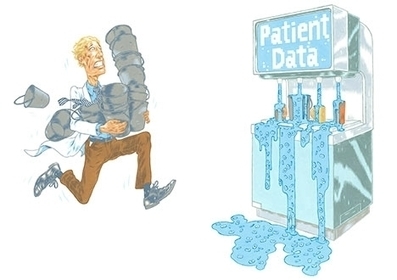
Managing the data deluge an electronic health system provides can be a seemingly onerous task, but corralling the information will improve your practice.
Thanks to electronic health records and requirements that doctors use those systems to collect and share data, physician practices have easy access to information they never had before. The data, experts say, hold a lot of power. They can transform the way physicians treat patients and run their practices.
Since the rise of EHRs, much of the talk about patient data has been geared toward so-called big data used by insurance companies, researchers and large health systems to conduct large-scale research projects, guide best practices and determine population-based health statistics. But the data that go into those repositories originate inside physician practices. Experts say that in addition to sending the data along for outside projects, the information collected within a practice’s four walls can be used for its own data projects.
Practices already are collecting and reporting certain data measurements to meet requirements of the meaningful use incentive program. But many have not used the data beyond submitting the required reports, because they probably don’t know where to start.
See on amednews.com
Independence comes at price many doctors still willing to pay – amednews.com
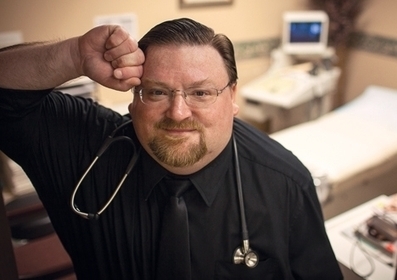
Physicians in private practice say they are struggling financially compared with employed peers, but that the sacrifice is worth the autonomy.
See on amednews.com
Serious Medicine Strategy: House Majority Leader Eric Cantor Shifts the Paradigm on Healthcare–From Cuts to Cures.
House Majority Leader Eric Cantor (R-VA) said on Wednesday: “If you cure disease, you no longer have to spend dollars towards treating the symptoms … of those diseases.”
Bingo. Of course, cures are cheaper than care. It’s cheaper to beat than to treat. That was the lesson of polio. A cure is cheaper than care.
If we want to “bend the curve” on healthcare costs–and we all do–this is the right way to do. Also the only humane way.
New England Leads Nation In Primary Care – Newsroom: Bernie Sanders – U.S. Senator for Vermont
With Vermont leading the way, five of New England’s six states rank in the top six for primary care doctors per capita, according to datafrom the Association of American Medical Colleges. The sixth, Connecticut, ranks 12th. As the national shortage of primary care doctors expected to increase after the federal Affordable Care Act takes full effect next year, some are looking to New England’s states with an eye to what they’ve been doing right.
Several factors contribute to New England’s relatively strong position. Among them: strong public health programs ensuring that high percentages of residents have health coverage, meaning fewer doctors deliver uncompensated care. Massachusetts, which enacted a universal health care program in 2006, has about 97 percent of its residents carrying health coverage. In Vermont it’s about 94 percent.
See on www.sanders.senate.gov
Health Affairs: For States That Opt Out Of Medicaid Expansion: 3.6 Million Fewer Insured And $8.4 Billion Less In Federal Payments
According to a study published in the June 2013 issue of Health Affairs:
[F]ourteen governors have announced that their states will not expand their Medicaid programs. We used the RAND COMPARE microsimulation to analyze how opting out of Medicaid expansion would affect coverage and spending, and whether alternative policy options—such as partial expansion of Medicaid—could cover as many people at lower costs to states. With fourteen states opting out, we estimate that 3.6 million fewer people would be insured, federal transfer payments to those states could fall by $8.4 billion, and state spending on uncompensated care could increase by $1 billion in 2016, compared to what would be expected if all states participated in the expansion. These effects were only partially mitigated by alternative options we considered. We conclude that in terms of coverage, cost, and federal payments, states would do best to expand Medicaid.
“Physician-owned hospitals seize their moment” – amednews.com
Physician owned and operated facilities are not necessarily bad places to go for healthcare.
American Medical News, amednews.com, reported in April 29, 2013:
When the federal government sorted through the first round of clinical information it was using to reward hospitals for providing higher-quality care in December 2012, the No. 1 hospital on the list was physician-owned Treasure Valley Hospital in Boise, Idaho. Nine of the top 10 performing hospitals were physician-owned, as were 48 of the top 100.
Yet, physicians can no longer own hospitals to which they refer their patients and are severely restricted from expanding those hospitals whose physician ownership was grandfathered.
The continued distrust of physicians and their vilification by Congress and most every state legislature hurts healthcare. It’s time to unburden physicians from lawyer mandated restrictions that never made any sense — repeal the Stark Law and every other restriction on physicians’ referring their patients to entities that they have an ownership in. The laws and the regulations that have been put into place are beyond comprehension and require physicians who are trying to be compliant to spend unnecessary dollars on lawyers. There are many appropriate tools for dealing with fraud and abuse by physicians who over utilize, or bill for services not performed, or who perform sub-par medicine — they can be professionally disciplined, lose their license, go to jail, fined. On the private side, they can be sued. Congress adopts these strict liability patient referral restrictions because they are easy to enforce. That should not be the basis for interfering with an entire industry.
Bill Would Let Texas Doctors Get Data From Driver’s Licenses
Health care providers in Texas could soon collect or verify patient information by swiping that patient’s driver’s license.
The measure allowing such data collection is one of a handful that the Texas Medical Association is pushing this legislative session to help modernize medical practices. The association is also backing bills that would standardize preauthorization forms used by health plans for prescription drugs and health care services.
Of course, this is why we have electronic medical records.
See on www.nytimes.com
 Joseph Rugg's Health Law Blog